
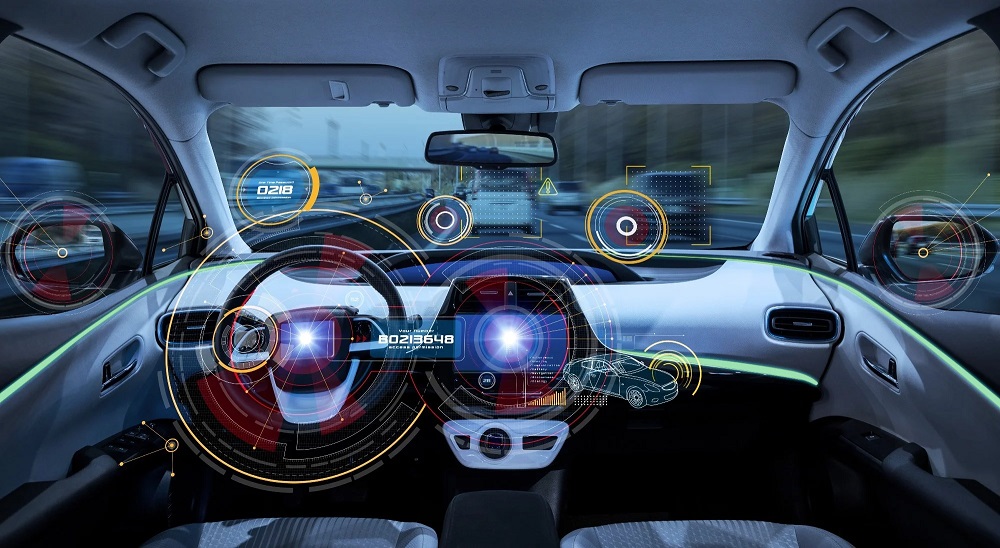
The modern automobile has evolved from a purely mechanical machine into a sophisticated, data-driven computer on wheels. At the heart of this transformation lies a complex network of automotive sensors. These miniature components act as the nervous system of the vehicle, constantly monitoring internal performance and external environments to provide real-time data to the engine control unit and safety modules.
By bridging the gap between mechanical action and digital intelligence, sensors have become the primary drivers of innovation in the automotive industry. They are no longer just luxury additions; they are fundamental requirements for meeting rigorous safety standards and environmental regulations. This article explores how these sensors function and the profound impact they have on making transportation safer and more fuel-efficient.
The Architecture of Intelligent Driving
To understand how sensors improve a vehicle, one must first look at the categories of sensors integrated into a modern chassis. Automotive sensors generally fall into two categories: internal monitoring sensors and external perception sensors. Internal sensors focus on the health and efficiency of the powertrain, while external sensors focus on the vehicle’s position relative to its surroundings.
The integration of these sensors allows for a concept known as sensor fusion. This is the process where data from multiple sources—such as cameras, radar, and ultrasonic sensors—is combined to create a more accurate and reliable model of the environment than any single sensor could provide alone.
Enhancing Vehicle Safety Through Active Monitoring
Safety has seen the most dramatic improvements due to sensor technology. Historically, vehicle safety was reactive, focusing on protecting occupants during a crash through seatbelts and airbags. Today, sensors enable proactive safety, or Advanced Driver Assistance Systems (ADAS), which work to prevent accidents before they occur.
Collision Avoidance and Automatic Emergency Braking
Radar and LiDAR sensors are the primary tools for collision avoidance. Radar uses radio waves to determine the distance, angle, and velocity of objects relative to the vehicle. Unlike cameras, radar is unaffected by rain, fog, or darkness. When the radar detects a rapidly closing distance between the car and an obstacle, it alerts the driver. If the driver fails to respond, the system can autonomously initiate Automatic Emergency Braking (AEB) to mitigate or avoid the impact.
Lane Departure Warning and Keeping Assist
Image sensors, or high-speed cameras, are mounted near the rearview mirror to track lane markings on the road. If the sensor detects the vehicle drifting out of its lane without a turn signal, it triggers a Lane Departure Warning. More advanced systems, known as Lane Keeping Assist (LKA), can apply small amounts of torque to the steering wheel to guide the vehicle back into the center of the lane.
Blind Spot Detection
Ultrasonic sensors and short-range radar are typically placed in the rear bumpers to monitor areas that are not visible in the side-view mirrors. When another vehicle enters the blind spot, a visual or audible alert is provided. This simple application of sensor technology significantly reduces side-swipe accidents during lane changes.
Maximizing Engine Efficiency and Fuel Economy
While safety features are the most visible benefits, sensors are equally critical under the hood. To meet global emissions standards and consumer demand for better gas mileage, engines must operate at peak efficiency at all times.
Oxygen and Air-Fuel Ratio Sensors
The oxygen sensor (O2 sensor) is perhaps the most important component for fuel efficiency. It monitors the amount of unburned oxygen in the exhaust gases. This data tells the engine computer whether the fuel mixture is too rich (too much fuel) or too lean (too much air). By constantly adjusting the fuel injection pulse, the engine maintains the stoichiometric ratio, ensuring complete combustion and minimal wasted fuel.
Manifold Absolute Pressure and Mass Air Flow Sensors
The Mass Air Flow (MAF) sensor measures the volume and density of air entering the engine. Since air density changes with altitude and temperature, the engine needs this data to determine exactly how much fuel to inject. This precise measurement prevents the engine from over-consuming fuel during high-load situations or idling inefficiently.
Tire Pressure Monitoring Systems
Efficiency is not limited to the engine; it also involves how the vehicle meets the road. Tire Pressure Monitoring Systems (TPMS) use pressure sensors inside each wheel to ensure tires are properly inflated. Under-inflated tires increase rolling resistance, which forces the engine to work harder and consumes more fuel. By alerting the driver to low pressure, TPMS helps maintain optimal fuel economy and prevents premature tire wear.
The Shift Toward Autonomous and Electric Vehicles
The rise of Electric Vehicles (EVs) and Autonomous Vehicles (AVs) has shifted the focus of sensor technology toward battery management and high-level spatial awareness.
Battery Management Sensors
In EVs, sensors are used to monitor the voltage, current, and temperature of individual battery cells. Maintaining an optimal temperature is crucial for battery longevity and safety. If sensors detect overheating, the thermal management system can divert coolant to the battery pack. Furthermore, accurate current sensors allow for precise range estimation, reducing “range anxiety” for drivers.
LiDAR and High-Resolution Mapping
For fully autonomous driving, LiDAR (Light Detection and Ranging) is the gold standard. LiDAR sensors emit laser pulses that bounce off objects and return to the sensor, creating a 3D “point cloud” of the surroundings. This allows the vehicle to perceive the world with incredible depth and precision, identifying everything from a pedestrian’s hand signals to the height of a curb.
Reducing Environmental Impact Through Emission Control
Automotive sensors play a silent but vital role in protecting the environment. Beyond improving fuel economy, specific sensors are designed to minimize the release of harmful pollutants like nitrogen oxides (NOx) and particulate matter.
NOx Sensors and Particulate Filters
In modern diesel and high-performance gasoline engines, NOx sensors monitor the efficiency of the catalytic converter. If the sensor detects high levels of pollutants, the vehicle may increase the injection of Diesel Exhaust Fluid (DEF) or adjust engine timing to cool the combustion chamber. Temperature sensors also monitor Particulate Filters to determine when a “regeneration” cycle is needed to burn off accumulated soot, preventing exhaust blockages and maintaining engine health.
The Future: Connectivity and V2X Sensors
The next frontier for automotive sensors is Vehicle-to-Everything (V2X) communication. In this scenario, sensors do not just communicate with the car they are attached to; they communicate with other cars, traffic lights, and even the road infrastructure itself.
If a vehicle’s traction control sensors detect ice on a bridge, that data can be broadcast to all trailing vehicles via V2X. This creates a network of “crowdsourced” safety, where the sensors of one car protect the drivers of many others. This level of connectivity will be the backbone of smart cities, reducing traffic congestion and further improving the energy efficiency of entire transportation networks.
Conclusion
The integration of sensors into automotive design has fundamentally changed the relationship between the driver, the vehicle, and the road. By providing the data necessary for advanced safety systems and ultra-efficient engine management, sensors have saved countless lives and significantly reduced the carbon footprint of the global fleet. As we move toward a future defined by electrification and autonomy, the importance of these miniature electronic components will only continue to grow, making the dream of accident-free and zero-emission travel a closer reality.
Frequently Asked Questions
What happens if a safety sensor gets covered in dirt or snow?
Most modern vehicles are designed with failsafes. If a camera or radar sensor is obstructed by heavy mud, snow, or ice, the system will typically deactivate the associated feature (like Adaptive Cruise Control) and display a warning message to the driver. This ensures the driver does not rely on a compromised system.
Do automotive sensors require regular calibration?
Yes, especially after a windshield replacement or a collision. Sensors like those used for lane keeping or emergency braking are mounted at precise angles. If these are disturbed, they must be recalibrated by a professional using specialized equipment to ensure the data they provide remains accurate.
How do sensors help in reducing vehicle maintenance costs?
Sensors enable predictive maintenance. By monitoring vibrations, temperatures, and fluid levels, the vehicle can alert the driver to a potential mechanical failure before it becomes a major, expensive repair. This shifts maintenance from a reactive schedule to a condition-based schedule.
Can automotive sensors be hacked or interfered with?
While theoretical vulnerabilities exist, automotive manufacturers use encrypted Controller Area Network (CAN) buses and secure gateways to protect sensor data. Physical interference, such as “jamming” a radar with a specific frequency, is difficult to achieve in real-world driving conditions due to the complexity of the signals.
Are sensors in electric vehicles different from those in gasoline cars?
Many are the same, such as those for safety and cabin comfort. However, EVs replace engine-specific sensors (like O2 or fuel pressure sensors) with specialized electrical sensors that monitor high-voltage battery health, inverter temperature, and electric motor position.
Why are LiDAR sensors more expensive than traditional radar?
LiDAR uses laser light and complex optical components to create high-resolution 3D maps, whereas radar uses simpler radio waves. The precision required to manufacture LiDAR, along with the high cost of the semiconductor lasers involved, makes it more expensive, though prices are falling as the technology matures.
Do sensors continue to work when the vehicle is turned off?
Some sensors do. For example, security sensors, proximity sensors for keyless entry, and certain battery monitoring sensors remain active in a low-power mode to protect the vehicle and ensure it is ready for the next start-up.
